

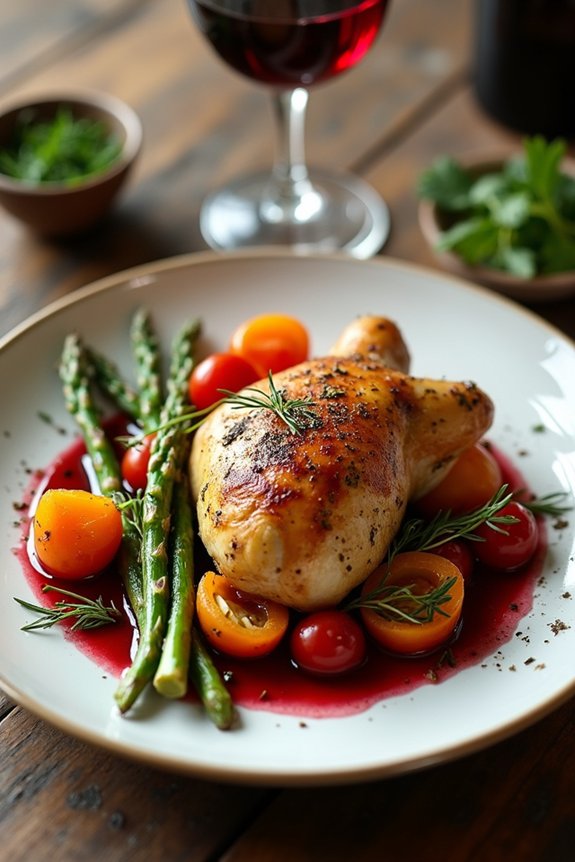
When I first started cooking with wine, I thought I could just splash it in like I was pouring a soda—what a rookie mistake. But trust me, timing and amount matter. I’ve learned that adding about half a cup early on, especially after sautéing those lovely aromatics, works wonders. It’s like magic. But how do you know when to slow down? Stick around, and I’ll share the secrets to perfecting your wine cooking game.
Cooking With Wine: Tips and Techniques

When it comes to cooking with wine, I’ve got a little secret: it can elevate your dishes from “meh” to “wow” faster than you can say “pour me another glass.” Seriously, though, wine isn’t just for sipping while you’re stirring spaghetti; it’s a magical ingredient that can add depth and richness to your meals.
Now, I know what you might be thinking—how do I know when to toss in a splash of merlot or a dollop of chardonnay? Well, let me break it down for you.
First off, let’s talk wine varieties. Each type of wine brings its own unique flavor profile to the table. Red wines, like cabernet or pinot noir, are perfect for hearty dishes like beef stew or marinades. White wines, such as sauvignon blanc or Riesling, shine in lighter fare like chicken or seafood.
And don’t forget about dessert! A splash of sweet wine can turn a basic fruit salad into a fancy treat. So, pick your poison wisely.
Now, onto cooking techniques. Timing is everything here. I usually add wine early in the cooking process so it has time to reduce and meld with the other flavors. If I’m making a sauce, I’ll pour in a good splash after sautéing my garlic and onions. This allows the alcohol to cook off, leaving behind nothing but flavor.
If I’m braising meat, I like to add wine towards the end for that rich, tender finish.
But don’t go overboard—too much wine can overwhelm your dish, and nobody wants to taste a bottle of cabernet in their pasta. A good rule of thumb? Start with about a half cup, and adjust based on what you’re making.
Cooking with wine is like having a dance partner; you gotta find the right rhythm to truly shine. High end cookware sets can help you achieve that perfect balance in your dishes. So, pour yourself a glass, get creative, and let the magic happen. Trust me, your taste buds will thank you.
FAQs
Can I Use Cooking Wine Instead of Regular Wine?
Sure, you can use cooking wine instead of regular wine, but here’s the catch: cooking wine often has added salt and other preservatives.
While it might seem like a shortcut, it can dull the flavor enhancement benefits you’d get from a good bottle.
I learned that the hard way when my dish tasted more like a salt lick than a gourmet meal.
How Does Wine Affect the Flavor of My Dish?
Wine’s like a magic potion for your dishes. It enhances flavor, bringing out the best in your ingredients.
When I add a splash, I notice an aroma infusion that makes my kitchen smell divine. It’s incredible how a little red or white can transform a simple sauce into something gourmet.
I’ve burnt a few meals trying to impress, but wine? It never disappoints.
Is It Safe to Cook With Wine if I Don’t Drink?
Absolutely, it’s safe to cook with wine, even if you don’t drink.
The cooking benefits are fantastic—wine adds depth and richness to dishes. Plus, most of the alcohol evaporates during cooking.
I mean, who doesn’t want their food to taste like a gourmet masterpiece without a hangover?
Just remember, use it wisely; a splash here, a drizzle there. It’s all about balance, right?
Cooking with wine can be a game-changer, trust me.
Does Cooking Wine Have the Same Alcohol Content as Regular Wine?
Cooking wine usually has a lower alcohol content than regular wine. It’s often been salted and is meant for flavor, not sipping.
I mean, who wants to drink a wine that’s fundamentally a cooking experiment gone wrong? When I’ve used cooking wine, I’ve noticed it doesn’t give the same depth as a nice bottle of red or white.
What Types of Wine Are Best for Cooking Specific Dishes?
When it comes to cooking, I swear by red wine for hearty dishes like beef stew—it adds depth, trust me.
For lighter fare, white wine’s my go-to, especially in chicken piccata.
Now, dessert wine? It’s perfect for poaching fruits or drizzling over ice cream.
And don’t forget fortified wine, like sherry, which adds a nutty flavor to soups.
Seriously, experimenting with these makes cooking way more fun, and who doesn’t love a little adventure?
Final Thoughts
So, there you have it—cooking with wine can be a game changer in your kitchen adventures. Just remember, a little goes a long way; you don’t want to drown your dish in a wine pool, right? Start small, taste as you go, and find that perfect balance. Who knew a splash of merlot could turn a simple pasta into a gourmet delight? Now, go ahead and pour yourself a glass, and let your culinary creativity flow!

