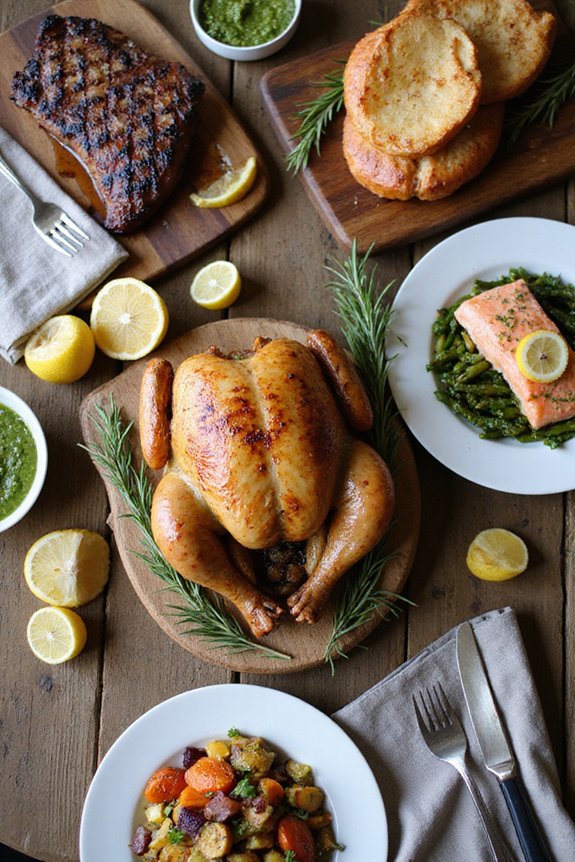
So, you want to nail that perfect steak with the reverse sear method? I get it. It sounds fancy, but trust me, it’s just a clever way to make your meat juicy and tender, with a crust that could make a Michelin chef weep. Here’s the kicker: it’s all about low and slow in the oven before a quick, hot sear. And honestly, who doesn’t want to impress their friends with a steak that looks like it came straight from a restaurant? Stick around, and I’ll walk you through the process, step by step.
Reverse Sear: Achieving Steak Perfection

If you’ve ever wondered how to achieve that perfect steak—juicy, tender, and with a crust so good it could make you weep—then let me introduce you to the reverse sear method. Trust me, it’s a game-changer.
You start by cooking the steak slowly at a low temperature, letting it work its magic until it’s just about done. This way, you can avoid the dreaded overcooked steak that’s as dry as a desert. I’ve been there, and it’s not pretty.
First, you’ll want to season your steak generously. I mean, really get in there with that steak seasoning. Sprinkle it all over, and let it sit for a bit. This isn’t just a casual sprinkle; it’s a full-on flavor hug for your meat.
While it’s soaking up those spices, preheat your oven to a low temperature—around 225°F should do the trick. Pop that seasoned steak on a wire rack over a baking sheet and let it bake until it hits about 10-15 degrees below your desired doneness. For medium-rare, that’s around 120°F. Yeah, I know, it feels a bit like waiting for a pot of water to boil, but patience is key here.
Now, here’s where the magic happens. Take it out and let it rest for a few minutes. I know, I know, it’s torture. But resist the urge to plunge in. This is where the reverse sear comes into play.
Heat up your grill or cast-iron skillet until it’s screaming hot. Sear that steak for about a minute or two per side. You wanna hear that sizzle; it’s music to my ears.
And voila! You’ve got a steak that’s tender on the inside and has that amazing crust on the outside. It’s like a culinary hug. Using a premium electric fish smoker can also enhance the flavor of your meals, including perfectly cooked steaks. Trust me, your taste buds will thank you.
FAQs
Can I Use the Reverse Sear Method for Other Meats?
Absolutely, you can use the reverse sear method for pork chops and chicken breasts!
I’ve tried it, and let me tell you, it’s a game-changer. For pork chops, cook them low and slow first, then sear for that crispy outside.
Chicken breasts benefit too; it keeps them juicy. Just remember, the key is patience.
And who doesn’t want to impress friends with perfectly cooked meat? Trust me, they’ll be begging for your secrets.
What Type of Steak Is Best for Reverse Searing?
For reverse searing, I swear by ribeye steak and filet mignon.
Ribeye’s marbling adds flavor, while filet mignon’s tenderness is unbeatable. You’ll really taste the difference.
I once tried it with a sirloin, and let’s just say, it was a steak disaster.
With ribeye, you get juicy bliss; with filet, it’s like steak royalty.
Trust me, these cuts elevate your game—perfect for impressing guests or just treating yourself on a Tuesday night.
How Long Does Reverse Searing Typically Take?
Reverse searing usually takes about 1.5 to 2 hours, depending on the steak’s thickness.
First, I slow-cook it in the oven until it hits the desired internal temp, which might take 45 minutes to an hour.
After that, I sear it on high heat for a few minutes. It’s all about that perfect crust.
Just remember, patience is key! Good things come to those who wait, right? Just don’t burn it.
Can I Use a Grill Instead of an Oven?
Absolutely, you can use a grill instead of an oven. In fact, grill techniques can give your steak a fantastic smoky flavor.
Just make sure to manage your cooking temperatures carefully. Start low to get that even heat, then finish with a sear on high.
I once burned a steak trying to rush it—don’t be like me. Remember, patience pays off. Your taste buds will thank you, and so will your grill.
Should I Season My Steak Before or After Cooking?
I always season my steak before cooking. It helps those flavors really sink in. Think of it as a flavor hug.
Sure, some folks sprinkle afterward, but I find it lacks that juicy punch. My go-to is a mix of salt and pepper, simple yet effective.
If you’re feeling fancy, try garlic or herbs for extra zing. Just remember, seasoning techniques can make or break your steak.
Final Thoughts
So, there you have it. The reverse sear method isn’t just a fancy technique; it’s a game changer. You get that tender, juicy steak with a crust that could rival your favorite restaurant. Trust me, your taste buds will thank you. Plus, it’s kind of fun to feel like a grill master, even if you occasionally set off the smoke alarm (just me?). Give it a shot, and enjoy impressing your friends—or just yourself—next time you fire up the oven.