

This post may contain affiliate links. Please read our disclosure policy.
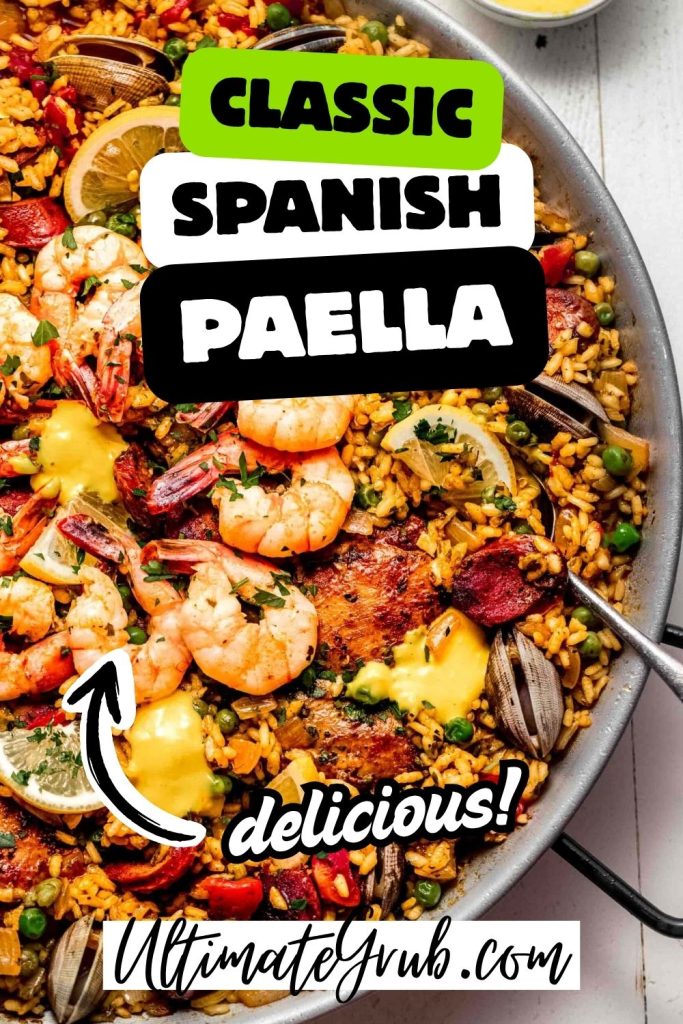
This is not just rice in a pan.
Paella is one of those dishes that carries history, technique, and a very specific way of doing things. It’s bold, layered, and when it’s done right, it feels like something special—not just another meal you threw together.
And here’s the thing—traditional Spanish paella isn’t about complicated ingredients. It’s about respecting the process.
You’re building flavor step by step. You’re letting the rice cook the way it’s supposed to. And you’re not rushing anything.
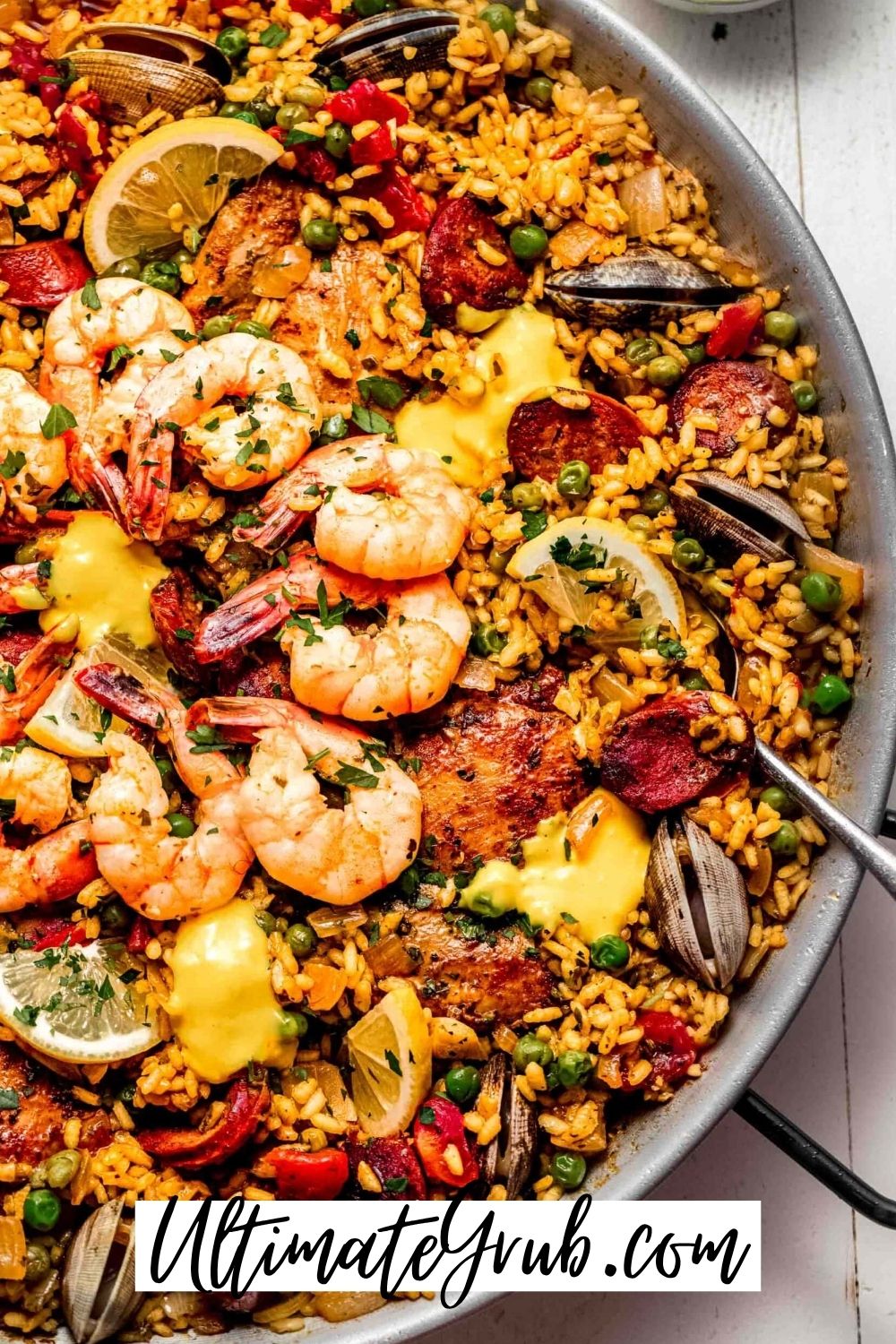
You’ve got saffron-infused rice, deeply seasoned broth, tender chicken, and seafood layered right on top. And at the bottom? That golden, slightly crispy layer of rice called socarrat—that’s the part everyone fights over.
This is the kind of dish that rewards patience.
Why You’ll Love This Traditional Spanish Paella
This recipe works because everything builds on the step before it.
You’re not dumping ingredients into a pot and hoping for the best. You’re creating layers of flavor, starting with the chicken, then the sofrito, then the broth, and finally the rice.
Each step adds depth.
The rice absorbs everything as it cooks, which means every bite tastes like the whole dish—not just one part of it.
Then there’s the texture.
You’ve got tender, separate grains of rice on top, but underneath, you get that crispy, caramelized layer. That contrast is what makes paella stand out.
It’s not just flavor—it’s the way it feels when you eat it.
Recipe Overview
Prep Time: 20 minutes
Cook Time: 45–50 minutes
Total Time: About 1 hour 10 minutes
Servings: 6
Traditional Spanish paella is made by cooking rice with saffron, broth, chicken, and seafood in a wide pan, allowing it to absorb flavor and develop a signature crispy bottom layer.
Serve hot, straight from the pan.
What You’ll Need for Spanish Paella
This recipe is all about using the right ingredients and understanding why they matter.
Short-grain rice is essential. It absorbs liquid without turning mushy, which is exactly what you want for paella.
Saffron gives the dish its signature flavor and color. It’s subtle, but it’s what makes paella taste like paella.
Chicken adds richness and builds the base flavor early in the cooking process.
Seafood brings that coastal Spanish element and adds another layer of flavor toward the end.
Olive oil is used throughout to build and carry flavor.
Garlic, onion, and tomato form the sofrito, which is the backbone of the dish.
Paprika adds warmth and depth, and the broth ties everything together.
Each ingredient has a purpose. Nothing is random.
Tools For This Recipe
- Large paella pan or wide skillet
- Wooden spoon
- Knife
- Cutting board
- Measuring cups and spoons
Ingredients for Spanish Paella
This is a traditional-style mixed paella that combines chicken and seafood for balance.
You’re aiming for a dish where no single ingredient takes over, but everything contributes.
For the Spanish Paella:
- 2 tablespoons olive oil
- 1 pound chicken thighs or drumsticks
- Salt and pepper to taste
- 1 small onion, chopped
- 4 cloves garlic, minced
- 1 medium tomato, grated or finely chopped
- 1 teaspoon smoked paprika
- Pinch of saffron threads
- 3 cups chicken broth
- 1½ cups short-grain rice (Bomba or similar)
- 1/2 pound shrimp, peeled and deveined
- 1/2 pound mussels, cleaned
- 1/2 cup peas
How to Make Spanish Paella

Start by heating olive oil in a wide pan over medium heat. The wider the pan, the better the rice will cook.
Add the chicken and season it. Let it brown properly. Don’t rush this step—this is where your base flavor comes from.
Once browned, remove the chicken and set it aside.
In the same pan, add the onion and cook it slowly until softened. This is the start of your sofrito.
Add the garlic and cook briefly until fragrant.
Now add the tomato and let it cook down. You want it to thicken and deepen in color. This step builds the backbone of the flavor.
Stir in the paprika and saffron.
Pour in the broth and bring it to a simmer.
Add the rice and spread it evenly across the pan.
From this point on, don’t stir the rice.
Return the chicken to the pan, placing it on top.
Let everything simmer gently as the rice absorbs the liquid.
After about 10–15 minutes, add the shrimp, mussels, and peas.
Continue cooking until the rice is tender and the liquid is mostly absorbed.
For the final step, increase the heat slightly for a few minutes.
You should hear a light crackling sound. That’s the socarrat forming.
Remove from heat and let it rest for a few minutes before serving.
Substitutions and Variations
Paella has regional variations, but the method stays consistent.
You can make it with just chicken or just seafood.
Rabbit is also traditional in some versions.
If you can’t find saffron, you can substitute turmeric for color, but the flavor won’t be the same.
The key is to respect the cooking process, even if you adjust the ingredients.
What to Serve With Spanish Paella
Paella is designed to be a complete meal.
You can add a simple salad or some bread on the side, but it doesn’t need much else.
The focus should stay on the pan.
Leftovers and Storage
Store leftovers in the fridge for up to 2 days.
Reheat gently on the stovetop to preserve texture as much as possible.
The rice will soften slightly, but the flavor will still be there.
FAQs
Why shouldn’t I stir the rice?
Stirring the rice changes the entire texture of the dish. When you stir, the rice releases starch into the liquid, which makes it creamy—similar to risotto. That’s not what you want here. Paella is supposed to have separate grains that absorb flavor without becoming sticky. Leaving the rice undisturbed also allows the bottom layer to form that signature crispy socarrat. If you keep stirring, you lose both the texture and that crust.
What is socarrat and how do I know I got it right?
Socarrat is the crispy, caramelized layer of rice that forms on the bottom of the pan. It’s one of the most prized parts of paella. You’ll know it’s forming when you hear a gentle crackling or popping sound near the end of cooking. The key is to increase the heat slightly for the last couple of minutes without burning it. When done right, it’s golden and slightly crispy—not black or burnt. If it smells burnt, you went too far.
Can I make paella without a paella pan?
Yes, you can. A wide, shallow skillet works well as long as it gives the rice enough surface area to cook evenly. The biggest thing is avoiding a deep pot. If the pan is too deep, the rice will steam instead of cooking properly, and you won’t get the right texture or the socarrat. The wider the pan, the better your results will be.
Why is saffron so important?
Saffron gives paella its signature flavor and color. It has a subtle, slightly floral taste that you can’t really replicate with anything else. It’s not overpowering, but without it, the dish feels incomplete. If you skip it, you’ll still have a good rice dish—but it won’t taste like traditional paella. That’s the difference.
Can I use regular long-grain rice instead of short-grain?
You can, but it won’t give you the same result. Short-grain rice is designed to absorb liquid while staying tender and slightly firm. Long-grain rice tends to stay drier and doesn’t absorb flavor in the same way. That means your paella will be less cohesive and less flavorful overall. If you want the real texture and flavor, stick with short-grain rice like Bomba or Calasparra.
Final Thoughts
Traditional Spanish paella is all about patience and process.
It’s not complicated—but it does require you to pay attention and let each step do its job.
Once you understand how it works, it becomes one of those dishes that feels special every time you make it.
And when you get that perfect bite—tender rice with just a little bit of that crispy bottom—you’ll know you did it right.

