Cleaning and caring for nonstick pans can feel like a battle sometimes, can’t it? I’ve tried everything from fancy cleaning sprays to scrubbing like my life depended on it. Spoiler alert: none of that works. Instead, I’ve found that a simple soak in warm, soapy water does wonders. And trust me, using a soft sponge is key—those metal scrubbers? Total kitchen villains. Want to know the secret to keeping your nonstick surface slick and happy? Stick around, and I’ll spill the beans.
Tips for Cleaning Nonstick Pans
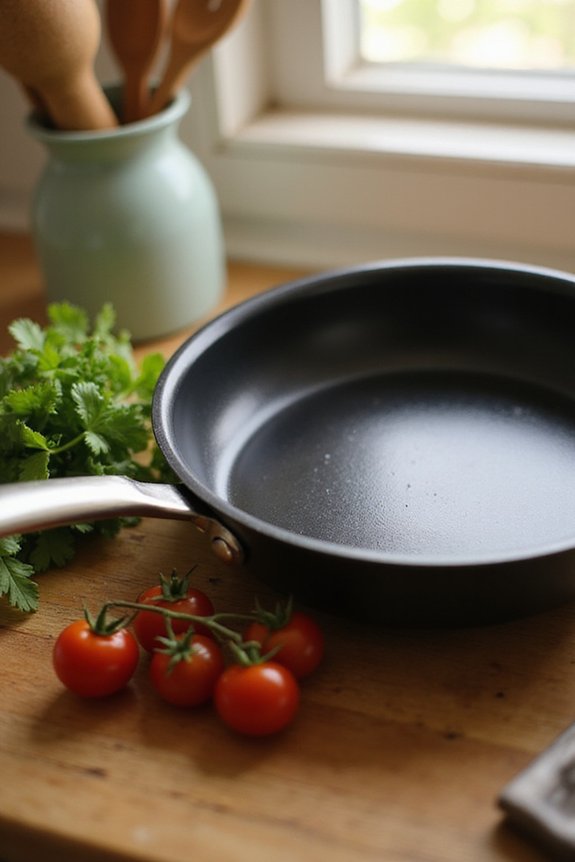
When it comes to cleaning nonstick pans, I often feel like I’m preparing for a high-stakes game show—because, let’s face it, those stubborn bits of food can feel like they’ve bonded with the surface for life. You know, the kind that makes you question your cooking skills? I’ve been there more times than I’d like to admit.
But over the years, I’ve picked up some tricks that really showcase the best cleaning methods, so let me share my secrets.
First off, avoid the temptation to scrub your nonstick pans with steel wool or even those abrasive sponges. Trust me, that’s a common mistake. I once thought I could power through the crud with a scouring pad, and let’s just say, my pan was never the same again.
Instead, I’ve found that a soft sponge and a gentle dish soap work wonders. Just fill the pan with warm, soapy water and let it soak for a bit. It’s like giving your pan a warm bath—a little pampering goes a long way.
After soaking, I use that trusty sponge to wipe away the residue, and if there are still some stubborn bits, I gently scrape them with a wooden spatula. No need to channel your inner Hulk here; a little patience can go a long way.
If you’re feeling fancy, a paste of baking soda and water can also help lift those stubborn patches without damaging the coating.
Once it’s clean, I always make sure to dry my pan thoroughly. Leaving it wet can lead to pesky rust or even weird smells.
And here’s a pro tip—I like to season my nonstick pans occasionally with a dab of cooking oil, just to keep things slick and happy. Moreover, regular maintenance of your cookware can extend its lifespan significantly, leading to premium electric griddles that make cooking even more enjoyable.
FAQs
Can I Use Metal Utensils on Nonstick Pans?
No, I wouldn’t use metal utensils on nonstick pans.
Trust me, they’re like a bad breakup waiting to happen. Metal can scratch the surface, and once that happens, it’s like saying goodbye to your pan’s nonstick magic.
I stick to silicone or wooden utensils instead. They’re gentle, and my pans stay happy. Plus, who wants to deal with a scratched-up pan? Not me, that’s for sure.
Keep it smooth, folks.
Are There Any Specific Oils to Avoid on Nonstick Surfaces?
You definitely want to avoid oils with low smoke points, like extra virgin olive oil.
I learned that the hard way—let’s just say my pancakes turned into a smoky disaster.
Instead, go for canola or grapeseed oil; they’re great nonstick oil options.
Just remember, if an oil starts smoking, it’s not just your pan that’s in trouble—your dinner might be too.
How Often Should I Replace My Nonstick Pans?
I usually replace my nonstick pans every 3 to 5 years, but it really depends on how often I use them.
If I spot scratches or the coating starts to peel, it’s definitely time for a change. Those replacement signs can sneak up on you, right?
Factors like cooking intensity and care habits play a role too.
Can I Put Nonstick Pans in the Dishwasher?
Honestly, I wouldn’t risk it. Nonstick pans and dishwasher safety don’t mix well. The high heat and harsh detergents can damage the coating, and I’ve learned that the hard way.
Instead, I hand wash mine with a gentle sponge and mild soap—takes just a minute. It’s all about nonstick maintenance, you know?
Plus, I’d much rather save my pans than deal with a sticky mess that makes me question my cooking skills.
What Temperature Is Safe for Cooking With Nonstick Pans?
When cooking with nonstick pans, I stick to a safe cooking temperature of around 400°F. Higher heat? Forget it! That’s when I risk damaging the nonstick coating. I’ve learned the hard way, trust me.
Medium heat works wonders for eggs and pancakes.
And here’s a fun fact: nonstick pans often lose their effectiveness above 500°F. So, keep it cool, and your cooking will be a breeze—without the sticky mess.
Final Thoughts
So there you have it—cleaning and caring for your nonstick pans isn’t rocket science, right? Just treat them gently, give ‘em a soak, and they’ll be begging for your next culinary adventure. Remember, a little oil goes a long way in keeping that nonstick magic alive. And hey, if you accidentally scratch them, just pretend you meant to create a unique design—artistic flair, right? Keep these tips in mind, and your pans will thank you (or at least stay out of the trash).