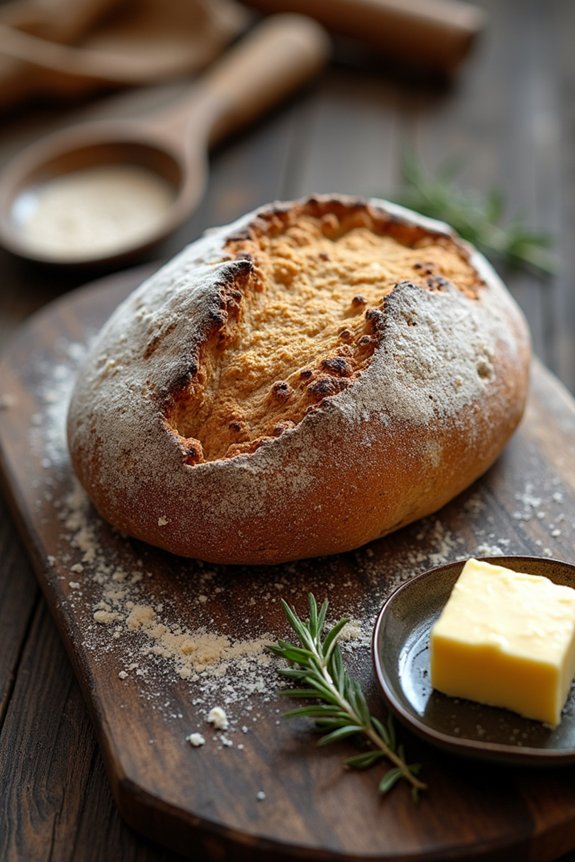
Ever tried making rustic sourdough bread? It’s like a warm hug for your taste buds! The crust is crackly, and the inside? Oh, so chewy. And guess what? You don’t need fancy tools or ingredients. Just flour, water, and a little patience! Sounds easy, right? But let’s talk about what really makes this bread special and how you can impress your friends with it! Ready to plunge into?
Why You’ll Love this Rustic Sourdough Bread
You know what’s amazing? This rustic sourdough bread!
Seriously, it’s not just delicious; it’s got health benefits, too! The fermentation process helps with digestion and gives it that unique flavor profile we all crave.
And let’s be honest, who doesn’t love a crusty loaf that’s soft and chewy inside?
Every bite feels like a warm hug, right?
Plus, you can totally impress your friends with your baking skills—no one has to know how easy it is!
What You’ll Need
Let’s get our baking game on!
To make this rustic sourdough bread, you’ll need some essential ingredients. Grab 1 cup of sourdough starter, 6 cups of all-purpose flour, and a package of active dry yeast.
Don’t forget 1½ cups of warm water, 3 tablespoons of sugar, 3 tablespoons of unsalted butter, and 1 teaspoon of salt.
Sourdough benefits include its unique flavor and amazing texture!
But remember, ingredient sourcing matters. Fresh ingredients make a world of difference!
Cooking Tools For This Recipe
When whipping up a delicious batch of rustic sourdough bread, having the right tools can make all the difference!
You’ll need a few baking tools that are truly kitchen essentials.
First, grab a big mixing bowl. You’ll also want a sturdy wooden spoon for mixing—trust me, your arms will thank you!
Don’t forget a clean surface for kneading. A sharp knife’s key for those fancy slashes, too!
And a wire rack for cooling? Absolutely!
I sometimes forget the simplest things, but these tools are game-changers.
To elevate your baking experience, consider investing in premium supplies that can enhance your culinary creations.
Ready to get baking? Let’s do this!
Ingredients For Rustic Sourdough Bread
To create a delicious rustic sourdough bread, you’ll need to gather a few essential ingredients that will work together to create that signature tangy flavor and delightful texture. The beauty of sourdough bread lies in its simplicity and the quality of its components.
By using a sourdough starter, you’ll harness the natural fermentation process, allowing the dough to rise beautifully and develop its characteristic taste.
In addition to the starter, you’ll need a combination of flour, yeast, water, sugar, butter, and salt. Each ingredient plays a vital role in the overall flavor and structure of the bread. Make sure you’re using fresh ingredients to achieve the best results.
With everything ready, you’ll be well on your way to baking a loaf that’s not only rustic but also incredibly satisfying.
Ingredients For Rustic Sourdough Bread:
- 1 cup sourdough starter
- 6 cups all-purpose flour
- 1 (1/4 ounce) package active dry yeast
- 1 1/2 cups water
- 3 tablespoons sugar
- 3 tablespoons unsalted butter
- 1 teaspoon salt
- Cornmeal (for sprinkling)
When making rustic sourdough bread, it’s important to keep an eye on the dough’s consistency as you mix and knead. If it feels too sticky, you can gradually add more flour, but be careful not to overdo it.
Additionally, allow the dough sufficient time to rise, as this will enhance the flavor and texture of your bread. Finally, don’t skip the steaming step in the oven, as it helps create a beautiful crust on your loaf!
Enjoy the process and the wonderful aroma that fills your kitchen!
How To Make this Rustic Sourdough Bread

To make this delightful Rustic Sourdough Bread, start by bringing 1 cup of sourdough starter to room temperature. In a large mixing bowl, combine 2-1/2 cups of the 6 cups all-purpose flour with 1 (1/4 ounce) package of active dry yeast and set this mixture aside.
Next, in a saucepan, heat and stir 1 1/2 cups of water, 3 tablespoons of sugar, 3 tablespoons of unsalted butter, and 1 teaspoon of salt just until the mixture is warm (120-130 degrees Fahrenheit) and the butter is almost melted. Pour this warm mixture into the flour and yeast combination, then add the sourdough starter. Beat the mixture until it’s well combined and smooth, making sure to scrape the sides of the bowl to incorporate all the ingredients.
Once the mixture is smooth, gradually stir in as much of the remaining flour as you can. On a lightly floured surface, knead in enough of the remaining flour until you achieve a moderately stiff dough that’s both smooth and elastic. Shape the kneaded dough into a ball and place it in a lightly greased bowl, turning it once to coat the surface. Cover the bowl and let the dough rise until it has doubled in size.
After it has risen, punch the dough down and turn it out onto a lightly floured surface. Divide the dough in half, cover it, and let it rest for 10 minutes.
Next, lightly grease a large baking sheet and sprinkle it with cornmeal. Shape each half of the dough into a ball, place them on the prepared baking sheet, and flatten them into about 6-inch circles. Use a sharp knife to make crisscross slashes about 1/4 inch deep on top of the loaves. Cover the shaped dough and let it rise for another 30 minutes.
Preheat your oven to 375 degrees Fahrenheit, and once it’s heated, place the bread in the oven and create steam. Bake for 30-35 minutes, or until the bread tests done. Once baked, cool the loaves on a wire rack and enjoy the wonderful aroma of your freshly baked rustic sourdough bread!
Rustic Sourdough Bread Substitutions and Variations
Now that you’ve mastered the art of making rustic sourdough bread, let’s have some fun with it!
Want to mix things up? Try flour alternatives like whole wheat or spelt flour. They add a nutty flavor!
And if you’re out of yeast, no worries! You can use baking soda or even more sourdough starter.
Feeling adventurous? Add herbs or cheese for a twist! Keep in mind that using high-quality ingredients can significantly enhance the flavor of your bread.
But remember, every change might lead to different textures. It’s all about experimenting!
What To Serve With this Rustic Sourdough Bread
When you’ve got a loaf of rustic sourdough bread fresh out of the oven, the possibilities are endless!
I mean, what’s better than tearing off a warm piece and dipping it into some flavorful dipping oils? It’s like a hug for your taste buds!
And let’s not forget about cheese spreads! Creamy, cheesy goodness slathered on a slice is pure bliss.
You could even create a fun appetizer platter with veggies and meats.
The bread is so versatile, it’ll impress anyone! Irresistible Spinach Artichoke Dip is a perfect pairing for your rustic sourdough.
Trust me, you’ll want to keep this bread around for all the tasty pairings!
Leftovers and Storage
If you’ve got leftover rustic sourdough bread—lucky you!
Storing bread can be a bit tricky, but don’t worry. Just wrap it in a clean kitchen towel, then pop it into a paper bag. This method keeps that glorious bread freshness while letting it breathe.
And if you’re like me, you might forget it’s there!
After a couple of days, slice it up and freeze the pieces. They’ll be perfect for toasting later!
But don’t let it sit too long—stale bread isn’t fun. Trust me, I’ve made that mistake!
Enjoy your delicious bread, my friend!
FAQs
How Long Does Sourdough Bread Last at Room Temperature?
Sourdough bread lasts about 3 to 4 days at room temperature.
But, hey, it’s all about sourdough preservation tips!
I like to store mine in a paper bag for airflow. It keeps the crust crispy!
And if you’re not finishing it in time, freeze it! Just slice it first for easy toasting later.
Seriously, who wants stale bread? Not me! Enjoy that fresh flavor while it lasts!
Can I Freeze Sourdough Bread?
Absolutely, you can freeze sourdough bread!
And it’s super easy. Just wrap it tightly in plastic wrap or aluminum foil.
I usually toss it in a freezer bag, too.
For thawing, let it sit at room temperature.
Or, if you’re impatient like me, pop it in the oven for a few minutes!
Trust me, it’ll taste just as good.
Who knew freezing techniques could save my bread-loving heart, right?
Enjoy!
What Is the Ideal Sourdough Starter Hydration?
The ideal sourdough starter hydration? It’s around 100%! That means equal parts water and flour by weight.
And trust me, maintaining those hydration levels is key! A wetter starter can give you a tangier flavor, while a stiffer one might be easier to handle.
But hey, don’t stress too much! I’ve messed up my starter plenty of times.
Just experiment and see what works for you. Happy baking!
How Can I Tell When the Bread Is Fully Baked?
To tell if your bread’s fully baked, check the crust color! It should be a lovely golden brown—like a perfect tan, not burnt!
But here’s the secret: use a thermometer! The internal temperature should hit around 190°F.
And don’t be shy—tap the bottom! If it sounds hollow, you’re golden!
Trust me, I’ve had my fair share of doughy disasters.
What Type of Flour Is Best for Sourdough Bread?
When it comes to sourdough, I’ve found that bread flour works wonders! It gives that lovely chewy texture we crave.
And guess what? Whole wheat can be a fantastic addition, too! It adds flavor and nutrition. Just mix it in with the bread flour for a wholesome twist.
Who knew baking could be so fun? Don’t worry if your first loaf flops; I’ve been there! Keep trying, and you’ll nail it!
Final Thoughts
So, there you have it! Rustic sourdough bread is not just tasty; it’s fun to make too! You’ll impress your friends and family (even if you burn a loaf or two—oops!). Just remember to enjoy every bite, whether it’s fresh or toasted. And hey, don’t forget to share! After all, what’s better than breaking bread together? So, roll up your sleeves and get baking! You’ve got this!