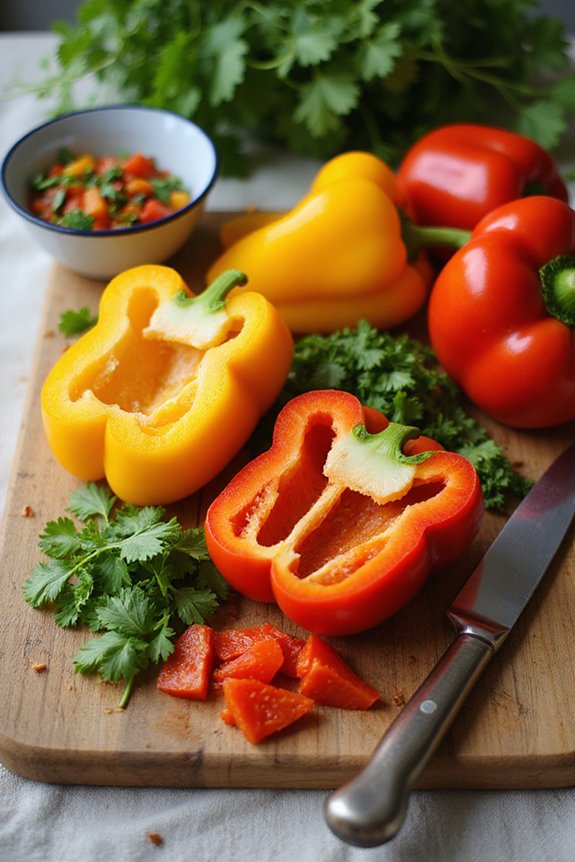
Cutting bell peppers with no waste? Trust me, it’s easier than it sounds. I mean, who wants to waste that juicy goodness?
First, I trim off the tops and bottoms to get a stable base—no more rolling peppers around like they’re on a culinary rollercoaster.
Then, I stand them up and slice down the sides to free those vibrant walls from the core.
Ready to get cutting?
Mastering Bell Pepper Cuts
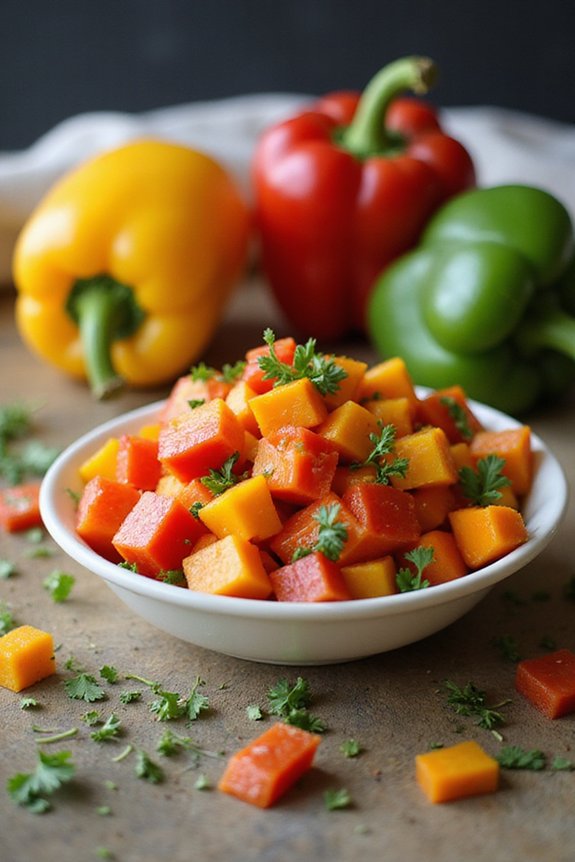
Cutting bell peppers might seem like a simple task, but if you’ve ever wrestled with one slippery veggie, you know it can quickly turn into a kitchen wrestling match.
Trust me, I’ve faced my fair share of “pepper wrestling” bouts. You know the kind: you pick up a shiny green pepper, and before you know it, it’s doing the cha-cha across your cutting board. So, let’s get down to business and tackle this like pros, shall we?
First off, let’s chat about pepper varieties. Bell peppers come in everything from bright red to deep purple, each with its own flavor profile. I’ve got a soft spot for the sweet red ones, but if you’re feeling adventurous, try the yellow or orange varieties. They’re all delicious, but their sweet profiles can change your dish, so pick your pepper wisely.
Now, let’s plunge into some slicing techniques. Grab your trusty chef’s knife and start by cutting the top and bottom off the pepper. This gives it a stable base, making it less likely to slip and wiggle away from you.
Once you’ve done that, stand the pepper upright and carefully slice down the sides, removing the fleshy walls from the core. You’ll be left with wide, flat pieces that are perfect for dicing or slicing.
For those seeking zero waste, don’t forget about the inner core. You can chop that up too, adding it to your stir-fry or salad. It’s like giving the whole pepper a second life. You might think, “Is it really worth it?” Absolutely. Every bit counts.
Don’t be afraid to experiment with different slicing techniques, too. Try julienne for stir-fries or thin slices for salads. The more you practice, the more confident you’ll become.
And let’s be real, mastering the art of cutting bell peppers might even make you feel like a kitchen ninja. So grab that knife and get slicing. Your taste buds will thank you!
FAQs
Can I Use Bell Pepper Seeds for Planting?
Absolutely, you can use bell pepper seeds for planting!
Just remember, seed germination can be a bit tricky. I’ve had my share of plant fails—like the time I confused a tomato with a weed.
So, here’s a tip: dry the seeds completely before planting them in a warm spot. Keep the soil moist but not soggy, and watch your little green friends sprout.
Who knew gardening could be so rewarding—and messy?
What Are the Health Benefits of Bell Peppers?
Bell peppers are fantastic for your health! They’re packed with vitamins A and C, boosting your immune system and skin health.
Plus, the nutritional value is impressive—so many antioxidants in those colorful beauties. I love tossing them in salads or stir-fries.
Did you know they can help with eye health too? Seriously, who knew veggies could be this fun?
How Can I Store Cut Bell Peppers?
To store cut bell peppers, I recommend placing them in an airtight container in the fridge.
It’s the best storage method I’ve found for preserving freshness. Just make sure they’re completely dry before sealing them up—nobody wants a soggy pepper.
I usually munch on mine within a week.
Pro tip: if you want to get fancy, toss them in a little lemon juice to keep that vibrant color. Trust me, you’ll thank me later.
Are There Different Varieties of Bell Peppers?
Absolutely, there are different varieties of bell peppers!
You’ve got sweet varieties like green, red, yellow, and orange, each with its own flavor profile.
Then, there are spicy alternatives like jalapeños or serranos, which can crank up the heat in your dishes.
Personally, I love mixing sweet and spicy in my salsa. It’s like a flavor party!
Can I Eat Bell Pepper Skin?
Absolutely, you can eat bell pepper skin! It’s packed with bell pepper nutrition, like vitamins A and C.
I often toss them into stir-fries or salads for that extra crunch. One time, I made a colorful veggie platter, and let me tell you, the skin added a delightful texture.
Just remember, if you’re a bit picky about bitterness, peel them lightly for a milder taste.
Final Thoughts
So there you have it—cutting bell peppers with no waste is totally doable and honestly kind of fun. You get to feel like a veggie ninja while making your meals more delicious and eco-friendly.
Plus, think of all the tasty bits you can add to your dishes. Remember, every little piece counts, right? Now go on, grab that pepper, and let your culinary creativity shine. Who knew cutting veggies could be this satisfying?