


When it comes to cooking pasta, it’s like a dance. Ever tried twirling spaghetti that’s stuck together? Not pretty. I’ve been there, trust me. The secret is simple: use a big pot, lots of boiling water, and don’t skimp on the salt—it’s like the pasta’s best friend. Give it a stir in those first few minutes, and voilà! But wait, there’s more to this pasta party. Want to know how to keep your sauce sticking like it’s meant to?
Tips for Perfectly Cooked Pasta
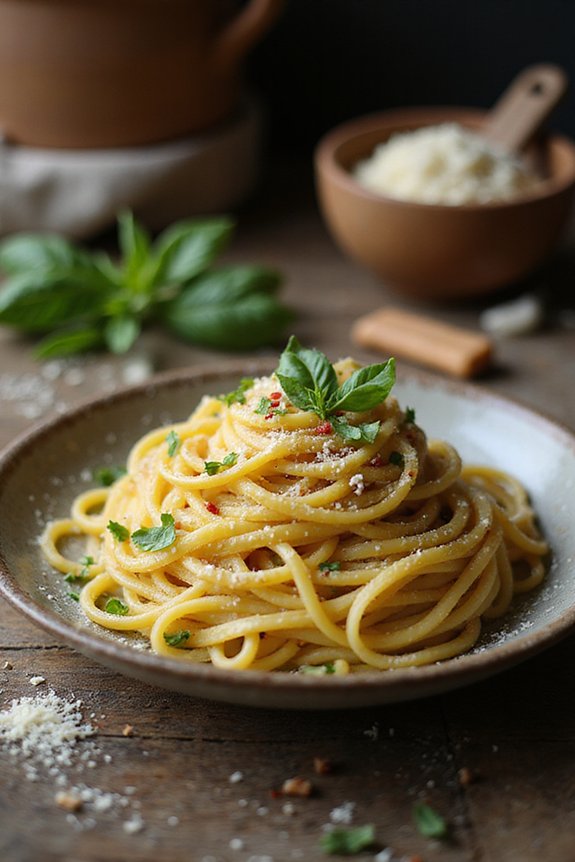
If you’ve ever pulled a pot of pasta off the stove only to find a sticky, clumpy mess, you know the frustration all too well. I mean, who wants to face a bowl of pasta that looks more like a science experiment gone wrong?
So, let me share some cooking tips that’ve saved my sanity and my dinner plans more times than I can count.
First off, let’s chat about water. Use a large pot and fill it with plenty of water. I’ve learned the hard way that skimping on water is like trying to swim in a kiddie pool—there’s simply not enough room for the pasta to move around.
When the water’s boiling, add a generous amount of salt. It might seem like a lot, but trust me, it’s what gives your pasta flavor and helps prevent sticking.
Now, let’s talk pasta types. Different pasta behaves differently. For example, spaghetti and fettuccine love to tangle like old friends at a reunion, while penne and farfalle tend to play nice.
So, if you’re aiming for a less sticky outcome, consider using shapes that naturally separate more easily.
Here’s a little secret I swear by: stir your pasta during the first couple of minutes of cooking. This is when it’s most likely to stick together.
Picture it like a dance party—if you don’t keep the rhythm going, you’ll end up with a wallflower situation.
Once your pasta’s cooked to al dente perfection, don’t rinse it under cold water unless you’re making a cold pasta salad. That pasta water is liquid gold, helping sauce stick later.
Instead, save a cup of that starchy water before draining. If you find your sauce is too thick, a splash of that water can save the day. Additionally, using the right premium bread maker can complement your pasta dishes by allowing you to create fresh bread that pairs beautifully with your meal.
FAQs
What Type of Pasta Is Least Likely to Stick Together?
If you’re looking for pasta that won’t stick together, I’d say whole wheat pasta is a solid choice.
It has a rougher texture, which helps sauce cling without turning into a sticky mess.
Egg noodles? They can be a bit slippery but work well too, especially in soups.
Just remember to stir them in the pot—like I always forget to do, and then I end up rescuing a pasta blob.
Not my finest hour.
Can I Prevent Sticking by Adding Oil to Water?
Adding oil to water? Well, it’s a bit of a myth.
Oil’s effectiveness in preventing sticking is questionable. Instead, focus on cooking techniques. Stir the pasta often and guarantee it’s in plenty of boiling water.
I’ve made the mistake of not using enough water, and trust me, it’s a sticky nightmare. If you’re really worried, toss it in a little oil after draining.
Just don’t drown it—pasta should swim, not float in grease.
How Does Pasta Shape Affect Sticking Issues?
Pasta shapes play a huge role in sticking issues.
Think about it: long, thin shapes like spaghetti are more likely to cling together than hearty shapes like penne.
I’ve noticed that using different cooking methods helps too. For instance, cooking pasta al dente means it’s firmer and less prone to sticking.
Is It Better to Rinse Pasta After Cooking?
Honestly, I wouldn’t rinse pasta after cooking.
Sure, rinsing can help with sticking issues—if you’re making a cold pasta salad. But it washes away the starchy goodness that helps sauce cling. Imagine drowning your spaghetti in cold water—yikes.
Plus, you lose flavor. If you’re worried about sticking, just toss it with a bit of olive oil right after draining, and voilà! Perfect pasta, ready for its sauce debut.
Trust me, it’s a game-changer.
Does the Brand of Pasta Influence Sticking?
Absolutely, the brand of pasta can influence sticking.
I’ve tried budget brands that feel like glue in the pot—yikes. Higher-quality pasta often uses better ingredients, like durum wheat, and has a rougher texture, which helps sauce cling and reduces sticking.
Plus, cooking methods matter too; a good boil and plenty of water can work wonders.
Final Thoughts
So, there you have it—your foolproof guide to pasta perfection. With a big pot, plenty of salt, and a little stirring magic, you’ll keep those noodles from clumping together like a high school dance gone wrong. Remember, no rinsing! Just let that sauce cling to every delicious bite. Now, go on and impress your friends with your pasta prowess. If all else fails, just toss in some cheese. Who can resist cheese, right?

