

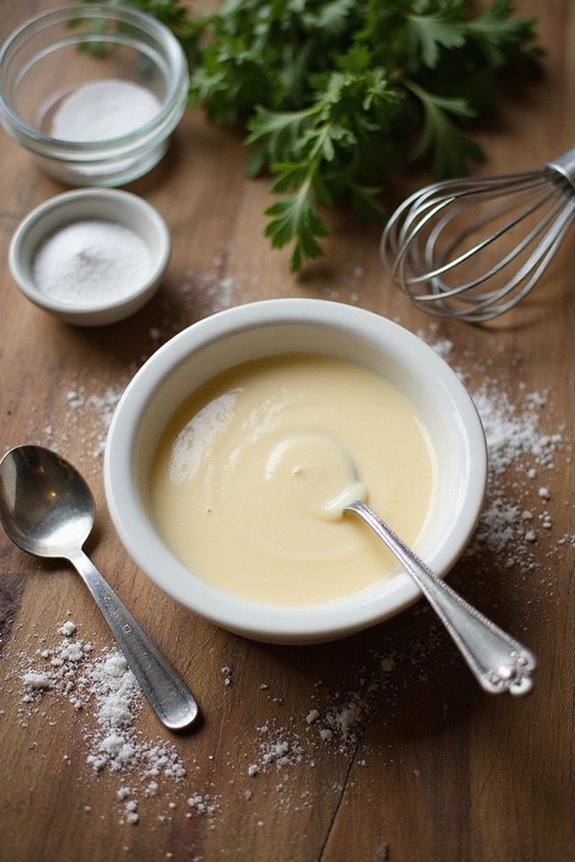
Making a slurry isn’t rocket science, but I’ve had my fair share of kitchen mishaps. You know, that time I thought I could just toss flour directly into the pot? Spoiler alert: it didn’t end well.
So here’s the real deal: mix 1 tablespoon of cornstarch or 2 tablespoons of flour with 2 to 3 tablespoons of cold water until smooth.
Then, while your sauce simmers, pour it in slowly, stirring like you’re trying to hypnotize it.
Trust me, the results are worth it. Want to find out the secret to getting it just right?
How to Create a Perfect Slurry

Making a slurry is one of those kitchen tricks that can elevate your cooking game, and honestly, it’s super easy—like, so easy that I sometimes wonder why I didn’t start doing it sooner. Seriously, if I’d a nickel for every time I fumbled with lumpy sauces, I’d be rich.
A slurry is simply a mixture of a starch, like cornstarch or flour, with a cold liquid. The best part? You can whip it up in no time, and it can save your dish from culinary disaster. Plus, using a premium cast iron skillet can enhance the overall cooking experience and heat distribution.
Now, let’s talk about slurry ratios. For cornstarch, I usually stick to about one tablespoon of cornstarch to two tablespoons of cold water. If I’m using flour, I might go for two tablespoons of flour to three tablespoons of water.
These ratios might seem small, but trust me, they pack a punch when it comes to thickening. Just remember, if you want a thicker sauce, go heavier on the starch. But don’t go overboard; too much can lead to that dreaded gummy texture. Nobody wants that.
When you’ve got your slurry mixed up—no lumps allowed, please—add it to your sauce or soup while it’s simmering. I like to pour it in slowly, stirring like I’m trying to impress a cooking show judge. It’s like magic watching your dish transform right before your eyes.
Here’s a hot tip: if your sauce isn’t thickening as quickly as you’d like, just give it a few more minutes. Patience is key, my friend.
If you’re feeling fancy, you can even add a splash of soy sauce or broth to your slurry for extra flavor. Who knew thickening could be so versatile?
Next time you’re in the kitchen, don’t forget this simple trick. I promise you’ll feel like a culinary wizard, and your meals will thank you. Just remember, no more lumpy sauces—let’s leave that in the past.
FAQs
Can I Use Other Thickeners Instead of Cornstarch or Flour?
Absolutely, you can use other thickeners!
I often reach for potato starch when I want a glossy finish, and arrowroot powder is my secret weapon for clear sauces.
Both work like a charm, but remember, they’re a bit different.
Potato starch thickens fast—like, blink and you’ll miss it.
Arrowroot’s great for clear liquids.
Just mix ’em with water first.
Trust me, your dishes will thank you.
Who knew thickening could be this fun?
How Long Does a Slurry Last in the Refrigerator?
A slurry usually lasts about 2 to 3 days in the refrigerator.
Trust me, I’ve learned this the hard way—nobody wants a funky, gelatinous surprise when they open the fridge.
Just store it in an airtight container, and if it separates, give it a good stir before using.
Fun fact: if it smells weird, toss it. Better safe than sorry, right?
Can I Make a Slurry With Cold Water?
Absolutely, you can whip up a slurry with cold water. I’ve done it plenty of times, and trust me, it’s super convenient.
Cornstarch benefits include thickening sauces and soups, and using cold water helps avoid those pesky lumps. Just mix equal parts cornstarch and cold water until smooth, then stir it into your dish.
It’s a game-changer for quick fixes in the kitchen. Who knew being a kitchen wizard could be this easy?
What Consistency Should My Slurry Be?
Your slurry should be smooth and pourable, kinda like a thin pancake batter. If it’s too thick, it won’t blend well; too thin, and it won’t do its job.
I usually aim for a consistency that coats the back of a spoon. Remember, different slurry types—like cornstarch or flour—might need slight adjustments.
Just think of it as a cooking art project. And hey, if it flops, at least you tried, right?
How Do I Store Leftover Slurry?
I store leftover slurries in airtight slurry containers. Just give them a good stir, pour them into a container, and label it with the date—because, trust me, you don’t want to forget about that mysterious goo in your fridge.
I’ve done that before, and let me tell you, it’s not pretty. They usually last a few days, but I wouldn’t push it. Use it up, or it’ll haunt you like that one sock from the dryer.
Final Thoughts
So, there you have it—a simple way to make a slurry that’ll elevate your sauces and soups from “meh” to “wow.” Just remember, no lumps allowed; we’re not trying to create a lumpy disaster here.
And if you mess up, don’t sweat it; I’ve been there, too. A little practice goes a long way!
So, grab that cornstarch or flour, and let’s thicken things up. Your taste buds will thank you later.

